You Can't Schedule Your Way to Balance. It Starts with Your Relationship with Yourself
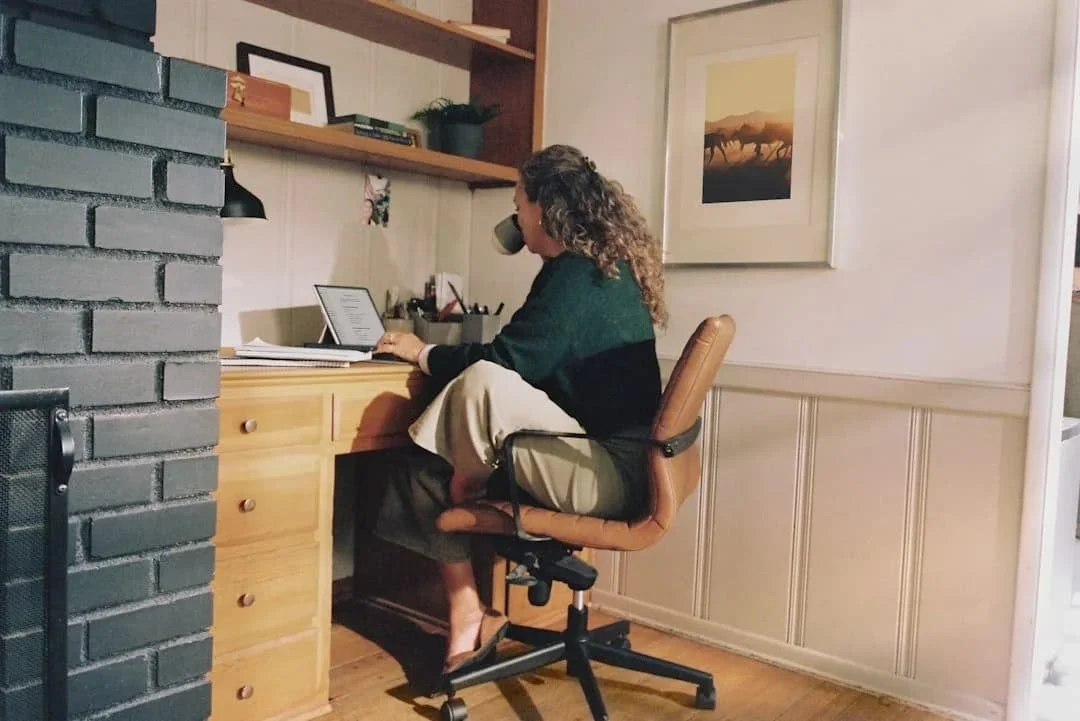
Nobody talks about the version of busy that doesn't feel dramatic, it just feels endless. It's not a moment. It's a current. A steady, relentless pull of things that need doing, people that need responding to, responsibilities that don't pause just because you're already at capacity. Most people aren't aware of how heavy it's gotten, not because they don't feel it, but because they never stop long enough to pay attention to the fact that its there. The going becomes the default. And somewhere in all that going, the question of how you're actually doing gets left behind.
If that landed somewhere, keep reading.
Why "Balance" Feels So Out of Reach
We're sold a version of work-life balance that looks like equal portions; career and rest and relationships and health all getting their fair share of you. A perfectly divided pie chart of a life.
But that's not how most people actually experience it. Most people experience it as an impossible juggle where something is always getting less than it needs, where rest feels like borrowed time, and where the idea of balance sounds nice in theory but laughable in practice.
Here's what often gets missed in that conversation: the weight we feel isn't just about the tasks on the list. It's about what we've learned to believe about ourselves in relation to those tasks. About what it means to fall behind. About what happens — emotionally, relationally, internally — when we don't meet the demands placed on us.
For a lot of people, the overwhelm of a full plate isn't just logistical. It's existential. It touches something much older than today's to-do list.
The Weight Beneath the Weight

When we feel crushed by everything we need to do, there's usually more happening than meets the eye.
On the surface: too many tasks, not enough time.
Underneath: a fear that if we don't keep up, something important will fall apart. That we'll let someone down. That we'll be seen as incapable. That our worth, which we've spent a long time building and protecting, will be called into question.
These fears don't announce themselves clearly. They just show up as an inability to rest without guilt. As the compulsive need to check things off before you can exhale. As the way your mind keeps running through the list even when your body has stopped moving.
This is one of the most important things to understand about the kind of overwhelm that doesn't go away no matter how many productivity hacks you try: it's being driven by something underneath the surface. Something that got wired in long before your current job, your current responsibilities, or your current life.
For a lot of people, that something is trauma.
Not necessarily the kind of trauma that's easy to name or point to. Sometimes it's the quieter kind; growing up in an environment where love or safety felt conditional on performance. Where your needs weren't taken seriously unless you'd first proven your usefulness. Where being still, asking for help, or taking up space without earning it first came with emotional consequences.
When that's the environment you came up in, you learn, early and deeply, that doing is how you stay safe. That overgiving is how you stay loved. That your worth is something you have to keep producing evidence for. Those lessons don't stay in childhood. They follow you into your career, your relationships, your to-do list, your inability to sit down without feeling like you should be doing something.
They carve out a core belief about what you have to earn just to be enough. And that belief doesn't disappear when circumstances change. It follows you. It turns every full plate into something heavier than it has to be because the plate was never really just about the tasks.
What It Means to Meet Yourself Here
What if the overwhelm wasn't something to push through, but something to get curious about?
Not in a way that adds another item to your list. Not in a way that requires you to have it all figured out. Just, what if you turned toward it, even slightly, instead of away from it?
Meeting yourself in the weight of everything you're carrying looks different for everyone. But at its core, it starts with this: acknowledging that what you're feeling is real, that it makes sense, and that you are allowed to take it seriously.
Not minimizing it. Not reframing it into a gratitude exercise before you've even let yourself feel it. Just,
This is a lot. It's okay that it's a lot.
That might sound simple. But for people who have spent years overriding their own internal signals in favor of getting things done, it's actually a radical act.
Balance as an Act of Self-Honor

Work-life balance, when we strip away the productivity-culture framing, is really a question of: what do I actually need to be well, and am I willing to honor that?
Not what you should need. Not what a more efficient version of you would need. What you, right now, in this body, in this season, actually need to feel like a whole person.
That question requires you to know yourself. To have some access to what's happening inside you, not just what's happening around you. To be able to distinguish between what you genuinely want and what you've been conditioned to pursue.
This is where a lot of people get stuck, not because they don't care about their wellbeing, but because they've been so disconnected from their own needs for so long that they've genuinely lost track of what those needs are. Rest sounds good in theory, but when they try to rest, they can't. Connection sounds important, but when they have downtime, they fill it with more doing.
The disconnection itself is part of the pattern. And it's worth addressing at that level, not just at the level of scheduling.
Small Ways to Start Honoring Yourself in the Overwhelm
You don't have to overhaul your life to begin shifting this. Small, honest moves matter.
Let the overwhelm be information, not indictment. When you feel the weight of everything, instead of immediately pushing through or shutting down, pause for a moment and ask: what is this telling me? Sometimes it's telling you that your plate is genuinely too full. Sometimes it's telling you that you need rest. Sometimes it's telling you that something on the list isn't actually yours to carry. The overwhelm knows things. Let it speak.
Notice what you're telling yourself about the weight. Is the inner narrative this is a lot and I need support or is it I should be handling this better? The difference between those two tells you a lot about the internal belief you're working from. One is honest. The other is punishing.
Identify one thing that is genuinely yours to put down. Not everything on the list belongs to you. Some of it was handed to you by other people's expectations. Some of it was placed there by a version of yourself who hadn't yet learned that saying no was allowed. One thing, put down, with intention, that's a meaningful start.
Practice the pause before the yes. A lot of how plates get overloaded is that we agree to things before we've checked in with ourselves about whether we have the capacity. The pause, even a brief one, is a way of honoring your own resources before offering them to someone else.
Let rest be part of the work. Not rest as a reward for completion. Not rest as recovery so you can produce more. Rest as a legitimate need that deserves to be met. Full stop.
This Is What Honoring Yourself Actually Looks Like

It doesn't always look like a spa day or a vacation. Sometimes it looks like leaving the dishes in the sink because you needed to sit for a minute. Sometimes it looks like saying "I can't take that on right now" to someone who expected a yes. Sometimes it looks like letting yourself feel the weight of everything instead of immediately trying to manage it away.
Honoring yourself in the overwhelm isn't about having less to do. It's about changing the relationship you have with what's on your plate and with yourself in the middle of it.
That relationship, the one between you and your own needs, your own limits, your own humanity, is the one that shapes everything else. And it's one that can genuinely change, with the right support and enough willingness to look at what's been driving the weight all along.
You Are Allowed to Be a Person, Not Just a Function
Work-life balance will never be a fixed destination. Life is too dynamic for that. But what can become stable, what can genuinely shift, is the internal ground you're standing on when everything feels like too much.
When that ground includes self-compassion, honest self-awareness, and the belief that your needs matter not because of what you produce but because you are a person, the weight doesn't disappear, but it becomes something you can actually work with.
You are allowed to take up space in your own life. Not just in the margins between obligations. In the center of it.
That's not a luxury. That's the point.
The weight you've been carrying didn't build overnight, and it won't shift overnight either. But it can shift. If you're ready to explore what's really underneath the overwhelm and start honoring yourself in a real way, I'm here.
Schedule a free consultation or contact me and let’s talk!