
Why You See Yourself the Way You Do and What Trauma Has to Do With It
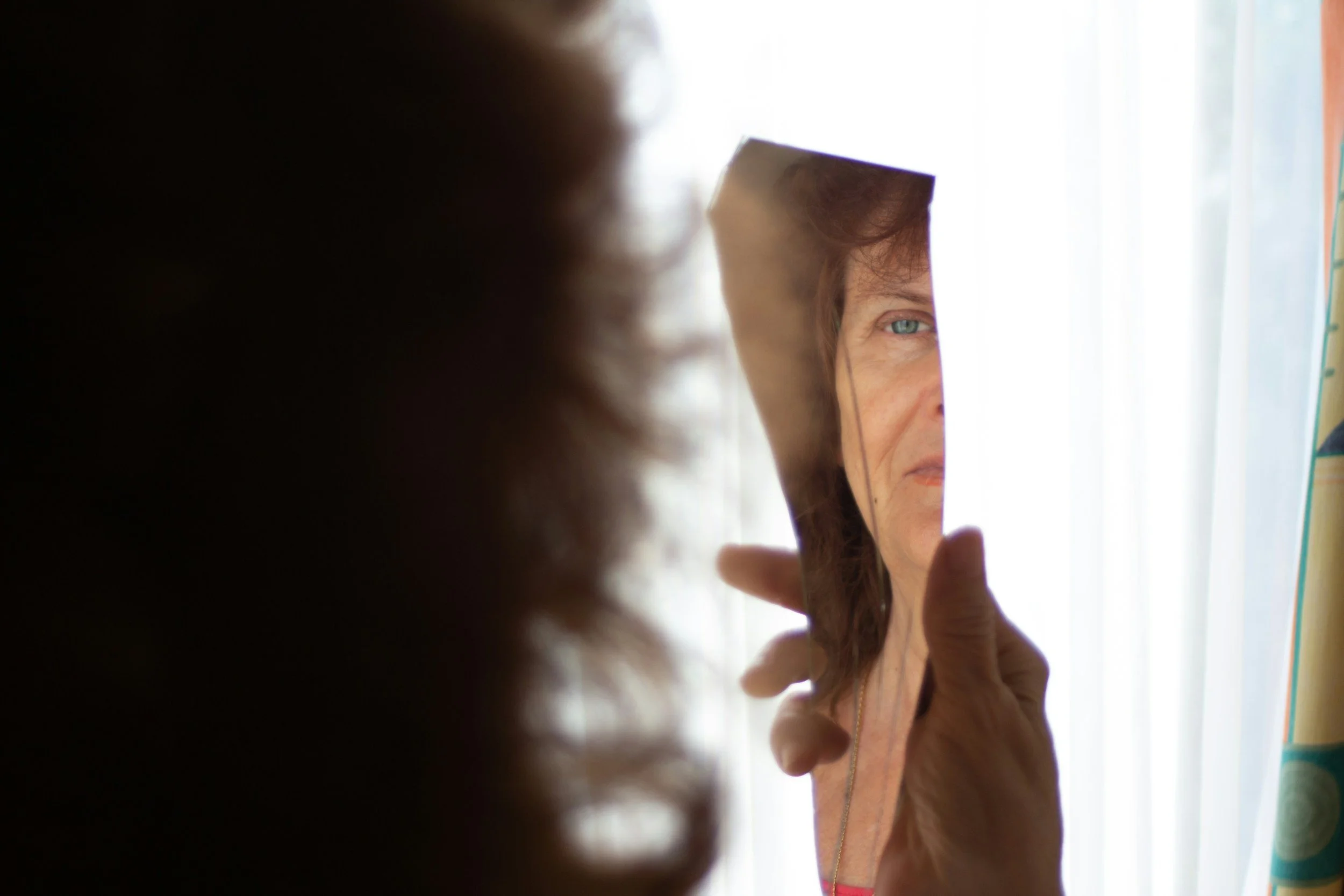
If you've ever looked in the mirror and felt a wave of criticism before you've even fully focused, you're not alone.
If you've spent years trying to make peace with your body through the "right" diet, the "right" workout, the "right" mindset shifts and it still hasn't worked, you're not alone in that either.
What I want to offer you today isn't another framework for loving your body. It's something that might actually explain why this has been so hard.
The way you see your body isn't just about your body.
It's about what you've lived through.
Your Body Image Didn't Form in a Vacuum
We don't wake up one day with a set of beliefs about our bodies. Those beliefs were shaped by the people around us, the environments we grew up in, the messages we absorbed before we were old enough to question them.
For a lot of women, those messages came early. A comment from a parent. A coach who said something that was never meant to stick but did. A childhood where your body was commented on, controlled, or made to feel like it was always somehow wrong.
Sometimes it wasn't one moment. Sometimes it was the slow accumulation of a thousand small things, the way your body was talked about at the dinner table, the images you were surrounded by, the sense that your worth and your appearance were somehow the same thing.
That's not a body image problem. That's a trauma response living in the way you see yourself.

What Trauma Does to the Way You See Yourself
Here's what's important to understand: trauma doesn't just live in your memories. It lives in your perceptions.
When we experience something painful and it doesn't get fully processed, it doesn't file itself away neatly in the past. It stays active. It colors the lens through which we see ourselves and the world around us.
So when you look in the mirror and immediately find something wrong. That isn't vanity. That isn't shallowness. That is a nervous system that learned, at some point, that your body wasn't safe, wasn't acceptable, or wasn't yours to inhabit comfortably.
Your inner critic isn't telling you the truth.
It's telling you what it learned to believe in order to survive.
The Body Keeps the Score; Including the Criticism
You may have heard the phrase "the body keeps the score." It comes from trauma research, and it means exactly what it sounds like: your body holds onto what your mind has lived through.
This is true for the big things, the events we typically think of as trauma. But it's also true for the quieter things. The years of being told your body needed to be different. The relationships where you felt like you were too much or not enough. The moments where you disconnected from your body because being in it felt unsafe.
Over time, that disconnection becomes familiar. It can start to feel like the only way to relate to your body is from the outside, as a critic, as an observer, never quite at home in your own skin.
And no amount of positive affirmations can reach something that lives that deep.
What Healing Actually Looks Like
Healing your relationship with your body isn't about learning to love every part of it on command. It's not about forcing gratitude or overriding the critic with positivity.

It's about going back to where the story started and processing what never got to be processed.
It's about understanding that the critical voice you hear when you look in the mirror was never really about your body. It was about what felt safe. What felt acceptable. What felt like survival.
When we do trauma work whether through EMDR, somatic therapy, or other body-based approaches we're not just changing your thoughts about your body. We're helping your nervous system learn something new:
That you are safe here. That your body is yours. That you are allowed to take up space.
You Deserve More Than Managing This
If you've spent years trying to manage your body image; counting, controlling, avoiding mirrors, white-knuckling your way through hard days. I want you to know something:
You were never doing it wrong. You were doing the best you could with what you had.
But managing is exhausting. And you deserve more than a lifetime of managing.
The way you see your body can change. Not because you finally get disciplined enough or find the right routine but because the wound underneath it finally gets to heal.
That's the work I do. And if any part of this resonated with you, I'd love to talk.
→ Schedule a free consultation to learn more about working together.